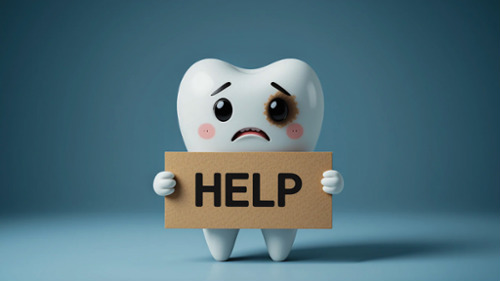
In a previous three-part series about cavities, we looked at the three essential ingredients for the initiation and progression of tooth decay. These factors - bacteria, sugar, and time - must all be present in order for tooth decay to occur. If we know how cavities form, we can develop prevention strategies aimed at minimizing each of the three essential factors for tooth decay.
It's important for everyone to care for their mouths and prevent cavities. But in very young children, specific problems arise that we don't see in older populations. First, cavities in very young children tend to occur in large numbers - often eight, ten, or twelve cavities all at once! Also, cavities in very young children can progress much faster than in older populations. Finally, young children are least likely to tolerate dental treatment in the dental office, frequently requiring anesthesia for treatment of tooth decay!
Delay Exposure to Cavity-Causing Bacteria for Babies
There's been some argument in the scientific community lately. Some figures in the past have shown that humans are outnumbered in their own bodies nearly 10-to-1. This means that for every human cell, there are 10 bacterial cells living in our bodies. More recent estimates have lowered that estimate to closer to 1-to-1. This is still a lot of bacteria! The truth is, without the many bacteria that inhabit our bodies (mostly in our gut), we wouldn't exist. They're nearly all helpful and essential to our survival.
Newborns lack a diverse colony of healthy bacteria on their skin, in their gut, and everywhere in their bodies. Bacteria are acquired most often from their mothers. Whether it's from nursing, where bacteria are passed from mom's skin to baby's mouth, or from the many other activities that involve close contact, these healthy colonies of bacteria begin to accumulate as soon as a baby is born.
As you can tell, if babies lack that diverse population of healthy bacteria in their bodies, they are more susceptible to takeover by disease-causing bacteria. One such example is in our mouths. Early exposure to cavity-causing bacteria, before the mouth has had time for healthy bugs to flourish, can leave the door open for these bad bacteria to really take over. Avoiding bad bacteria forever is not feasible, but delaying exposure for as long as possible is essential to give the healthy bugs time to get established.
Where do they come from?
The most common source of cavity-causing bacteria in children is from their mothers. This isn't a criticism - mom is often the one who is with baby the most. Bacteria - both good and bad - are transferred the same way we transmit other germs like cold and flu viruses. There are a few approaches to minimize the transmission of cavity-causing bacteria from mother to baby. The first is for mothers to be sure to care for their own oral health while they are expecting and after delivery. By treating any existing cavities and working to prevent future cavities, we can reduce the total number of cavity-causing bacteria in our own mouths, thereby reducing exposure to our kids.
It's also helpful to minimize saliva-sharing activities. Not sure how hot that baby food is? Don't put it on your own lips first and then pass it to your baby - you're also passing potentially harmful bacteria from your mouth to your baby's.
Contact Our Palos Heights Pediatric Dental Office
If you have further questions about how to help prevent cavities in your baby or toddler, please don't hesitate to contact our office. A friendly member of our team will be happy to answer all your questions and schedule an appointment for your child.