Skip to main content Accessible Version
Infant Oral Health
Early Care for a Lifetime of Healthy Smiles

Give your children beautiful smiles for a lifetime and help them develop healthy habits with early, frequent visits to their local pediatric dentist!

Infant Oral Health in Palos Heights IL
Let Us Care for Your Child's Dental Needs
Schedule an Appointment

Infant Oral Health in Palos Heights

Palos Pediatric Dentistry is here to help with your infant's oral health needs. Dr. Richard Facko is a skilled pediatric dentist in Palos Heights, IL. His experienced dental team loves working with children, and we look forward to meeting your little one in our dental office. Learn more about how we can help you maintain your infant's oral healthcare below.

Why Infant Oral Health Matters

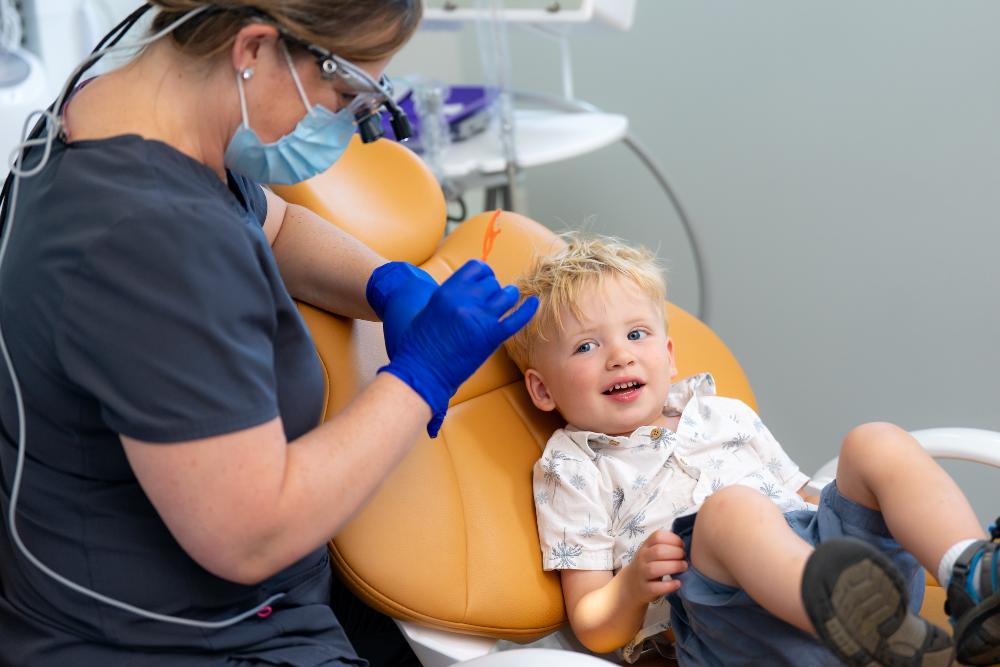
The health of your baby’s gums and the first teeth set the stage for your child’s oral health throughout childhood and the rest of his or her life. Establishing a dental home early gives yourchild in dental chair in palos heights child the chance to see that regular dental care is a normal part of life. Just like you teach your child to use the toilet and brush his or her hair, teaching your child to care for their teeth is an important part of self-care and grooming, and early dental appointments help to “normalize” this behavior.

Dental fear and phobia are common in our society, with about 20 percent of American adults saying that they don’t get the regular care they need because they are afraid of the dentist. Seeing a pediatric dentist – a dentist who specializes in treating kids – helps your child make the association that the dentist’s office is a fun and safe place to be, greatly reducing the chances of developing a dental fear later in life.

Children with poor oral health have more missed days of school, more hospital emergency room visits, a reduced ability to learn at home and in school, and increased costs of dental care when compared to children with healthy teeth. Getting your child off to an early start will help reduce anxiety and provide a foundation for a lifetime of good dental health.

Common Infant Oral Health Issues in Palos Heights

Although oral health issues tend to be less common in infants, they do exist, and we want to make sure that they are addressed. One of the most common questions we are asked about infant oral health is regarding cleaning the gums and the first baby teeth.

Parents can use a soft infant washcloth and water to gently clean the gums after feeding or before bed. No toothpaste is necessary at this age, although infant toothpaste is available, and we are happy to discuss these with you at your request. When the first teeth come through, we’ll have a conversation with you about what to look for in an infant toothbrush and toothpaste so you can give your child the best possible start.

While a toothbrush and toothpaste are important tools in maintaining oral health, diet plays an equally crucial role. Children establish dietary habits early – within the first twelve months of life. That is why this is such a critical time to encourage your child to eat healthy foods and snacks. The best and simplest advice is to encourage milk and water and do not offer your child juice in any form, chocolate milk, or other sweetened beverages. Once a child starts these habits, change becomes very difficult. Adding sugar-sweetened beverages to a sippy cup or bottle prolongs the amount of time the sugar is on the teeth. Avoiding it altogether is the best approach, but if you must give your child a sweetened beverage, restrict exposure to mealtimes only, and give your child the sweetened beverage in a regular cup to minimize exposure on the teeth.

Dr. Facko is often asked about bottle and pacifier use and thumb-sucking. Pacifiers and thumb-sucking are ways that your child self-soothes, and this is perfectly appropriate in the early years. Once your child reaches the age of three, these habits can affect dental development, and we can discuss strategies to discourage them. We recommend that you never put your baby to bed with a bottle, especially if it contains anything other than water. Juice, formula, and even breast milk can pool in the mouth overnight and lead to decay in those little teeth.

When Should Your Child’s First Visit Take Place?

Like the American Academy of Pediatric Dentistry and the American Dental Association, we recommend that your child’s first dental visit occur when the first tooth emerges or by his or her first birthday. Whichever special event arrives first should mark the beginning of their dental visits. 

infant after oral care exam in palos heightsThat said, we also believe in flexibility and trusting your instincts as a parent. If everything appears to be developing normally and you feel confident in your child’s health, then waiting until he or she is twelve months old is perfectly appropriate. If, however, you have any concerns about your child’s dental health, dental development, or oral habits, you are always welcome to call our Palos Heights pediatric dental office and request an appointment.

Why Are Regular Dental Visits Important for Children?

We know how busy you are as a parent, and we know every dental visit takes time out of your busy schedule. However, we also know that regular dental visits are vital to your child’s oral health, both in the short and long-term. 

In addition to helping prevent dental phobia down the line, dental visits play a big role in maintaining your growing child’s oral health, preparing them to develop and healthy, happy smile as their adult teeth come in.

Childhood dental visits are important for many reasons, including the ones we’ve listed below:

  • In our dental office, we can educate you and your child on proper brushing and flossing techniques, which will be useful for a lifetime.
  • During regular appointments, we can make recommendations on diet changes to help maintain or improve your child’s oral health. 
  • Regular dental cleanings ensure that if your child does begin to have problems with plaque buildup, which can lead to gum disease if not removed.
  • When your child comes in for an appointment, we may recommend sealants or fluoride treatments, helping prevent cavities from developing. 
  • Your child may be more encouraged to follow oral hygiene routines at home if they know they will be visiting our office soon. We will do everything we can to encourage their oral hygiene routine between appointments.
  • As your child grows and their permanent teeth begin to come in, we can monitor the progress and recommend orthodontic interventions if necessary. 

Additionally, even though your child’s baby teeth will fall out eventually, they still need to be healthy while they are in your child’s mouth to help prevent pain and infection. We will check your child’s baby teeth regularly for decay, and we will treat any cavities we find to help your child maintain excellent oral health.

Some dental treatments, like orthodontics, are easier and more effective when performed at a young age, so early intervention is important to our dental team. 

Basically, regular dental visits allow us to keep an eye on children’s oral health as they grow, so we can help them develop a bright, healthy smile, which they will appreciate as an adult. 

Why Palos Pediatric Dentistry?

At Palos Pediatric Dentistry, we treat your children as if they were our own. It’s as simple as that. Our focus is on preventive care and providing you and your child with the tools and information you need to help your child stay healthy.

Recent studies have shown a clear link between dental health and overall health, which has come to be known as the “oral-systemic link.” Providing specialized dental care for your child is just as important as your child’s yearly check-ups with the pediatrician. In addition to providing exams and cleanings, we will also review your child’s diet and hygiene habits and provide specific recommendations to help your child remain healthy.

We deeply value your involvement with your young child and invite you to accompany your child during his or her visit. We’ll always take the time to discuss your child’s care and health with you – you are, after all, a vital part of your child’s healthcare team!

Call our office today to schedule an appointment for your infant and take the first steps toward a lifetime of healthy habits. You can also check out a more detailed breakdown of  dental costs here

We look forward to seeing your child’s beautiful smile in our dental office.
Frequently Asked Questions

Thumb sucking and pacifier use are normal for babies.  It helps to soothe them and keep them comforted.  Most babies who use a pacifier or suck a thumb do so when they are tired, sleeping, or in need of comfort.  It’s a natural thing, and I think it’s great.  Babies who are able to self-soothe tend to sleep better, are well-rested, less crabby, and interact better within their own environment.  If given the choice between a baby who sucks her thumb, sleeps well, and learns well, who might need braces because of the sucking habit, OR a baby who doesn’t suck her thumb, doesn’t sleep as well, is tired and crabby, and still might need braces (for other reasons), I think you know my answer.  Some kids do have problems that need to be corrected by the orthodontist with braces, but I wouldn’t let that worry me with my own kids.

When will this stop?

As your baby grows, you’ll probably notice she sucks her thumb less during the day.  Eventually, the habit ceases altogether.  Most thumb and pacifier habits have stopped by the time your child enters kindergarten.  For those who make it past kindergarten, I would be happy to discuss ways that you can help your child stop his habit.

Babies first tooth | Palos Pediatric Dentistry

baby | Dentist for Babies Palos Heights

The first year as a parent is one of the most exciting times in anyone's life. It's easy to see why many times people forget that when the first tooth comes in, a lifetime of oral health is just beginning. Those early days, months, and years help to build a solid foundation of healthy habits that will last a lifetime. Our focus at Palos Pediatric Dentistry, PC is to start with healthy habits from the beginning, so that all children can enjoy a lifetime of oral health.

Don't overlook finding a dentist who is specially trained to care for your young child's unique dental needs. Richard Facko, DDS, is an American Board Certified Pediatric Dentist and is excited to share with you some tips to keep your baby's teeth healthy!

When should I take my child to the dentist for the first check-up?

We recommend a child's first dental visit by their first birthday. While many parents can't imagine what a dentist could possibly do with an infant, we strongly believe that this is one of the most important dental visits in your child's life. During this first visit, in addition to addressing any specific concerns you may have, we will:

  • Clean your baby's teeth (at this age, a thorough toothbrush cleaning is sufficient)
  • Examine your baby's mouth, and provide information about dental development
  • Apply fluoride, a protective coating to help prevent cavities Demonstrate how to properly clean your baby's teeth and gums
  • Discuss your baby's dietary habits- it's much easier to start off with a tooth-healthy diet than to have to make changes late
  • Provide information about what to expect with your baby's dental development in the future
  • Discuss trauma prevention, and what to do in case of an emergency If we start early and establish good habits at home, we can avoid problems in the future, ensuring that your child grows up with positive dental experiences and saving money on expensive dental treatment!

Dentist Dr. Facko giving a child a dental exam

What is the difference between a pediatric dentist and a family dentist?

While some families choose to bring their babies and infants to their family doctor, the majority prefer that their child sees someone who specializes in health care for children. Pediatric dentists are the pediatricians of dentistry. We are sensitive to the unique needs of children, and our practice is limited to children and adolescents. A pediatric dentist has two to three years of specialty training following dental school, including advanced training for children with special healthcare needs and with extensive dental needs.

Are baby teeth really that important to my child?

Your child's "baby" teeth are very important! They help your child speak clearly and chew nutritious foods. Primary teeth also provide a path for permanent teeth to follow when they erupt. Studies show that children with healthy teeth are more likely to grow up into adults with healthy teeth.

Are thumbsucking and pacifier habits harmful for a child's teeth?

The "dentist" answer is that thumbsucking and pacifier habits should cease by a child's first birthday. Our answer as parents ourselves is that there isn't much that can be done at three years old, particularly for children with thumb and finger sucking habits. We generally recommend stopping pacifier use by three years old, unless a child begins sucking a thumb as a replacement for the pacifier. Prolonged sucking habits result in problems that are usually easily fixed with braces or other appliances. Our approach to sucking habits is based on each individual, and we would be happy to discuss your child's habit with you.

How can I prevent decay caused by nursing?

Nursing a baby to sleep is natural, but as your child gets older it may become problematic. By your child's first birthday, we recommend that you stop nursing when your child wakes up in the middle of the night. Nursing your child to sleep or feeding during the night may allow the last sip of milk to sit on your child's teeth for hours. If your baby wakes at night, switching to a bottle with water in it may also help deter your child from waking up, since it isnt as appealing to them, and could result in more restful sleep for you and your baby in the long run.

Toothpaste: when should we begin using it and how much should we use?

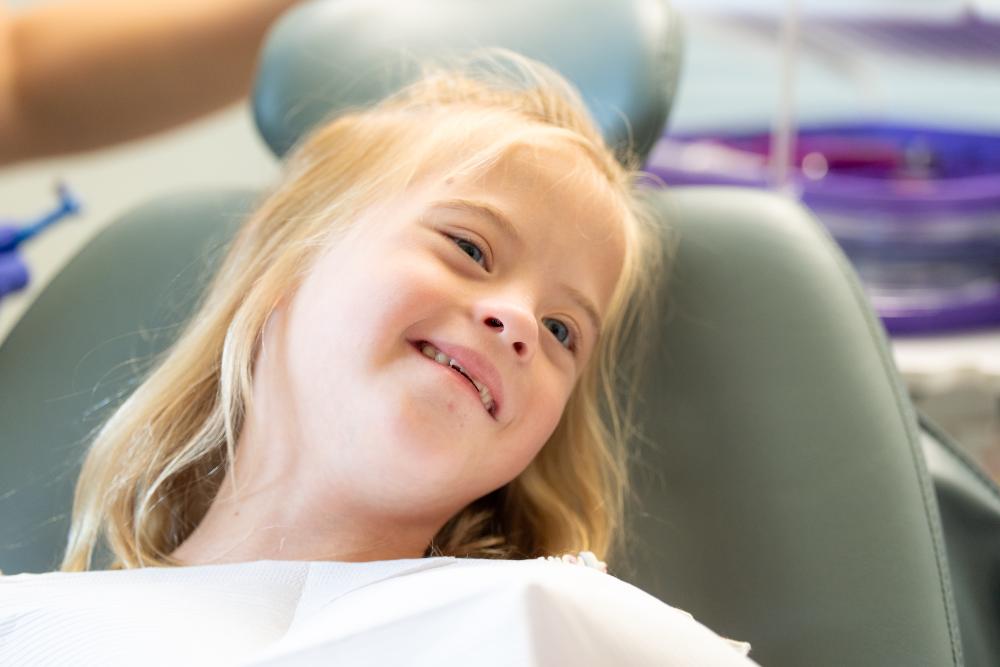
Young child at dentist in palos heights

Fluoride toothpaste is safe for ALL children, and should be used as soon as the first tooth begins to erupt! Use a "smear" of toothpaste to brush the teeth of a child under two years old. This means, if you turn the brush sideways, you don't really see a "lump" of toothpaste; just enough to cover the tips of the bristles. After the second birthday, dispense a "pea-size" amount of toothpaste and perform or assist your child's toothbrushing. Remember that young children do not have the ability to brush their teeth effectively. It is expected that young children will likely swallow all of the toothpaste that is on their brush, and it is safe to swallow toothpaste in the amounts mentioned. Please keep the fun-flavored toothpaste out of your child's reach to prevent accidental ingestion.

Studies show that dietary preferences are established very early in life, sometimes within just the first year. It is a great opportunity as a parent to provide your child with a healthy foundation that will stay with your child forever. Many products are on the market and targeted toward children that can be harmful to their teeth, including those "squeeze packs" of pureed fruit, juice boxes, and fruit snacks. We work with all of our families to give personalized recommendations for each child. Investing a little time and energy now pays huge long-term dividends for your child.

Stay Away From Juice!

Avoid giving your child juice. Avoid giving your child juice. That's not a type-o, we believe it's the most important thing you can do for babies and toddlers to prevent cavities. This includes no-sugar-added, all-natural, 100% organic juice, or whatever else the manufacturer wants to tell you to sell their product. There are no nutritional benefits to drinking fruit juice; it would be much better to eat whole fruit and drink water or milk. And sweetened beverages are the most common reason why young children get cavities.

All of our dental check-ups include diet counseling. We take the time to review your child's diet, and make specific recommendations for ways to improve to reduce the likelihood that your child will get cavities. Sometimes little changes can make a huge difference!

When should I begin brushing my baby’s teeth?

I always recommend that you begin brushing your baby’s teeth as soon as the first tooth erupts.  Don’t start brushing your baby’s teeth, start brushing your baby’s tooth! Because there’s only a tooth or two, it only takes a few seconds.  But, it’s important to remove plaque from your baby’s teeth, and it also teaches them very early on what a toothbrush is and what it’s used for.  It will quickly become part of your baby’s routine.  Before long, you’ll have a three-year-old who is reminding you that you forgot to brush his teeth!

What kind of toothbrush should I use?

There’s a whole shelf full of baby toothbrushes, but simpler is usually better.  I like the silicone brushes as a “toy”, but not as your baby’s real toothbrush.  I always recommend a regular nylon-bristled toothbrush, similar to the one adults use but in a miniature size.  I don’t feel comfortable with kids running around the house with a real toothbrush in their mouth, so if your baby wants a brush to play with I would use the silicone variety as a toothbrush toy.

What kind of toothpaste should I use?

This used to be a risk versus benefit question, and the old answer was to use fluoride toothpaste for “high-risk” babies.  Unfortunately, it’s almost impossible to identify at such a young age who is really at high-risk for cavities.  As a result, I recommend using fluoride toothpaste as soon as the first tooth erupts.  For babies, I recommend a “smear” of toothpaste – just enough to cover the tips of the bristles.  The benefit of using fluoride toothpaste to strengthen enamel outweighs the risk of such a small amount of ingested fluoride toothpaste.

When it comes to fluoride toothpaste, they’re almost all created equal.  Both kids and adult fluoride toothpaste contains 1000ppm fluoride.  The main difference is the flavor, and some adult toothpaste contains additives for whitening, sensitivity, etc.  I would recommend finding a flavor that seems pleasing to your child.  Then keep it out of her reach so she doesn’t get a hold of it when you’re not looking.

When do we begin flossing?

I don’t typically recommend floss for babies.  Focus on brushing twice per day with a smear of fluoride toothpaste.  We’ll get to that when they get older.


Your child's first tiny tooth marks the beginning of a lifelong journey toward oral health. That precious pearl of white emerging from pink gums isn't just adorable; it's a call to action for loving parents who want to protect their little one's smile from the very start.

Using fluoride toothpaste gives your child the gift of cavity prevention, but when should you introduce it? Keep reading to learn more.

When Should My Child Start Using Fluoride Toothpaste?

Here’s what you need to know about when and how much fluoride toothpaste is right for your little one’s smile:

  • First tooth — When your child’s first tooth erupts, use a tiny smear of fluoride toothpaste.
  • Additional teeth — When your child gets more teeth, use a pea-sized amount to protect their oral health.

Once they can spit the toothpaste out without swallowing it, you can increase the amount of toothpaste they use.

Questions about Fluoride Toothpaste in Palos Heights, IL?

If you have questions or concerns about your child’s oral health, we’d be happy to assist you! At Palos Pediatric Dentistry, our goal is for your child to achieve the healthiest teeth and gums possible.

Feel free to contact our dental office at (708) 263-6708

Meet Our Doctor:

Dr. Richard Facko | Palos Pediatric Dentistry

Richard Facko DDS, MS

Meet Dr. Richard Facko: Your Pediatric Dentist

Dr. Richard Facko, DDS, is the founder and Pediatric Dentist at Palos Pediatric Dentistry, PC. Since founding the practice in 2013, he has been dedicated to providing a high level of care for the families in his hometown. Dr. Facko has been a pediatric dentist since 2012 and loves guiding child patients toward finding the confidence in themselves to experience the dentist without fear.

Education & Certifications

Dr. Facko's roots are in the Southwest Suburbs of Chicago, where he grew up and attended Palos 128 and ...

Featured Blog Posts - Infant Oral Health

July 15, 2025

Bottle Mouth Syndrome: How Palos Heights Parents Can Protect Their Child’s Smile

As parents, we do everything we can to protect our children, from scraped knees to sniffles. But did you know that something as innocent as a bedtime bottle could put your child’s smile at risk? Let’s talk about bottlemouth syndrome: what it is, why it matters, and how Palos Heights ...

December 8, 2024

Emergency Dental Care for Babies: Teething Troubles or Something More?

Baby smiling next to birthday cake, palos heights IL

Teething is a wild ride for both babies and parents. As those tiny teeth start pushing through, you’ll probably notice lots of drooling, crankiness, and maybe a few sleepless nights. Totally normal, right? Most of the time, it is! But here’s the thing—not every teething symptom is business as usual.

Sometimes, ...

April 24, 2024

What Is Baby Bottle Tooth Decay?

A woman kissing her baby | dentist palos heights

When you have a baby, there are many things to consider regarding their care and safety. You may feel overwhelmed with all the decisions, so having a pediatric dentist you can trust regarding your baby’s oral health needs is essential. At Palos Pediatric Dentistry, we provide expert care and advice ...

We Welcome Children of All Ages to Our Office
Schedule Here